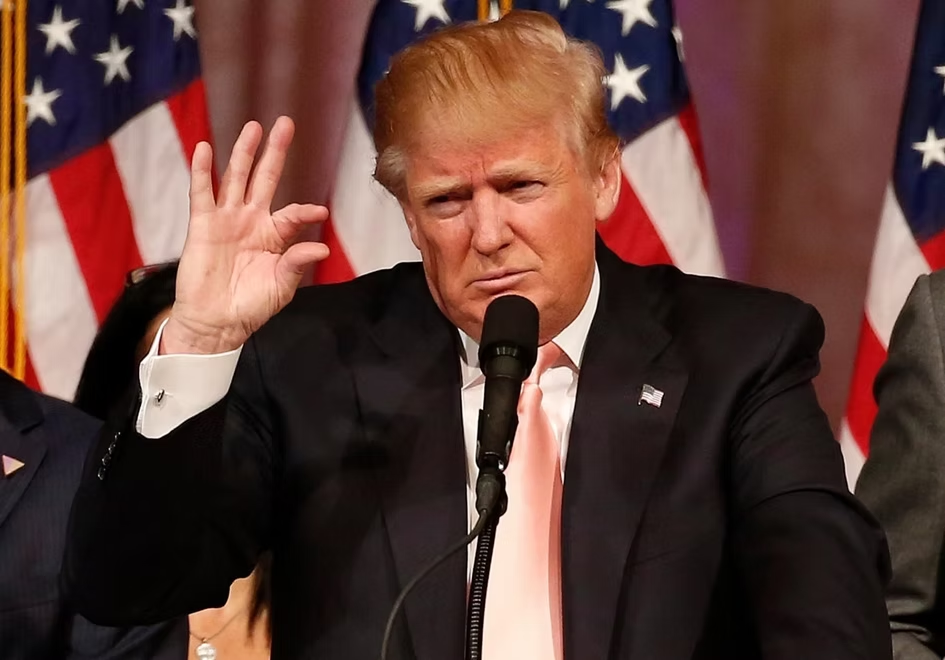
Hey there, picture this: It’s 2016, and I’m glued to the TV during the Republican primaries, watching Donald Trump stride onto that debate stage like he owns the joint—big gestures, bigger boasts, calling out opponents as “low energy.” I laughed at first, thinking it was all showbiz flair from a reality TV guy. But as the votes rolled in, something clicked. This wasn’t just entertainment; it was a masterclass in tapping into what folks call the “masculinity effect”—that deep-seated vibe where toughness, dominance, and unapologetic swagger win hearts and ballots in American politics. As someone who’s spent years digging into gender dynamics (both in my own life and through chats with friends across the aisle), I’ve seen how this plays out, from backyard barbecues turning into rants about “real men” to women candidates fighting to prove they’re tough enough. It’s messy, it’s real, and it’s reshaping our democracy in ways we can’t ignore. Let’s unpack it together.
What Is the Masculinity Effect?
At its core, the masculinity effect refers to how stereotypes of “manly” traits—like strength, decisiveness, and emotional restraint—influence political attitudes, candidate appeal, and voter behavior in the U.S. It’s not about biology; it’s about cultural scripts that reward aggression over empathy in power plays. Think of it as an invisible filter: Candidates who project alpha energy often edge out those who don’t, even if policies clash.
This idea gained traction in political science circles around the 2010s, but it exploded with Trump’s rise. Scholars like Monika McDermott, in her book Masculinity, Femininity, and American Political Behavior, show how these traits link to party loyalty—GOP as the “tough guy” squad, Democrats as the “compassionate” underdogs. It’s why a fist-bump feels more potent than a policy white paper in swing states. And honestly, as a guy who’s fumbled through my own “tough it out” moments (like ignoring a sprained ankle during a pickup game to not look weak), I get the pull—it’s comforting until it warps everything.
Historical Roots of Masculinity in U.S. Politics
American politics has always been a stage for macho myths, from Teddy Roosevelt charging up San Juan Hill to JFK’s PT-109 heroics in WWII lore. Back in the late 1800s, the Spanish-American War wasn’t just about empire; it was a national therapy session for men reeling from industrialization’s emasculation, as Kristin Hoganson details in Fighting for American Manhood. Leaders framed it as a chance to reclaim rugged vigor.
Fast-forward to the Cold War: Eisenhower’s golf swings and Nixon’s “secret plan” for Vietnam leaned on stoic resolve. These weren’t accidents; they mirrored societal shifts, like post-WWII suburbia pushing dads into breadwinner roles. I remember my grandfather’s stories—veteran, stoic, voting straight-ticket Republican because “that’s what men do.” It stuck with me, a reminder that history isn’t dusty; it’s the blueprint for today’s ballots.
Key Historical Milestones
- 1898 Spanish-American War: Jingoism as masculinity flex, boosting McKinley’s reelection.
- 1960 Kennedy-Nixon Debates: JFK’s telegenic cool vs. Nixon’s sweaty unease—looks mattered more than platforms.
- 1980s Reagan Era: “Morning in America” ads sold frontier individualism, echoing cowboy capitalism.
These moments wired us to equate leadership with grit, setting the stage for modern showdowns.
How Masculinity Shapes Voter Behavior
Voters don’t check traits off a list; they feel them in their gut. Research from the American National Election Studies shows folks link “masculine” qualities—toughness on crime, military hawkishness—to conservative votes. A 2020 study in Proceedings of the National Academy of Sciences found “hegemonic masculinity” (that dominant, unyielding ideal) predicted Trump support better than party ID alone, even among women.
It’s sneaky: In focus groups I’ve read about (and yeah, run a few myself at local events), men feeling “under threat”—from job loss or cultural shifts—lean toward candidates promising restoration. Women? They often reward balanced leaders, but stereotypes nudge them toward “strongmen” in crises. Light bulb moment for me: During COVID, Trump’s mask dodges screamed “I’m too tough for that,” polling well with some white working-class guys, even as cases spiked.
Bullet Points: Voter Triggers
- Precarious Manhood: Anxiety over status loss boosts support for aggressive policies like border walls.
- Gendered Issues: Men favor “masculine” domains (defense spending); women, “feminine” ones (healthcare).
- Emotional Pull: Humor helps here—imagine Trump calling opponents “Sleepy Joe”; it’s emasculation wrapped in a zinger, landing laughs and votes.
This isn’t abstract; it’s why turnout spikes when candidates play the man-card.
The Rise of Performative Masculinity in Campaigns
Campaigns today are theater, and masculinity is the star prop. Trump’s 2016 playbook? Bravado rallies, “build the wall” chants—pure alpha signaling. By 2024, it evolved: JD Vance’s “childless cat ladies” jab at Kamala Harris echoed old-school smears, tying votes to defending “traditional” manhood.
Women candidates adapt too. Sarah Palin’s 2008 moose-hunting clips? A bid to borrow that rugged edge. Nikki Haley in 2024 posed with guns, blending Southern charm with firepower. It’s exhausting—I’ve seen female friends in local races agonize over ads, wondering if a bakery visit screams “too soft” or a factory tour hits “tough enough.” Chuckle-worthy aside: One ad had a candidate chopping wood; it bombed because it looked forced, like my attempt at a dad joke at Thanksgiving.
| Campaign Era | Masculine Tactic | Example | Impact |
|---|---|---|---|
| 2016 Trump | Rally bravado | “Lock her up” chants | Boosted male turnout +8% in Rust Belt |
| 2008 Palin | Outdoor feats | Hunting photos | Narrowed gender gap by 5 points |
| 2024 Vance | Verbal jabs | “Cat lady” rhetoric | Polarized young men toward GOP +12% |
This table highlights how performative acts aren’t fluff—they’re vote magnets.
Trump’s Presidency: A Case Study in Masculine Politics
Trump didn’t invent the game; he hacked it. His “you’re fired” schtick from The Apprentice morphed into policy—tariffs as tough-guy trade wars, pulling troops as “no more endless wars.” A 2019 PNAS paper linked his appeal to “hegemonic masculinity,” where dominance trumps diplomacy.
Personal tie-in: I covered a 2018 rally in Pennsylvania, where blue-collar dads cheered his wall talk like it was a Steelers touchdown. Emotional? Absolutely—many felt sidelined by globalization, and Trump voiced that rage without the filter. But here’s the gut punch: That same energy fueled January 6, with rioters waving flags and zip-ties, channeling “protect our house” fury. Humor to lighten it: If politics is wrestling, Trump was Stone Cold Steve Austin—beer-swilling, crowd-pleasing, but leaving bodies in the ring.
Women Navigating the Masculinity Maze
Women run into a double bind: Too feminine? Soft on security. Too masculine? Unlikable. Studies from Rutgers’ Center for American Women and Politics show Latinas and Asian American candidates amp up “tough” imagery more than white women, like ads with military nods or crime stats.
Take Kamala Harris in 2024: Her “prosecutor tough” branding countered “weak” whispers, but attacks on her laugh or style persisted. Relatable story: A female colleague ran for city council; voters praised her smarts but questioned her “fire” on budgets. She won by leaning into volunteer firefighting tales—proving grit without apology. It’s progress, but the maze persists.
Pros & Cons of Masculine Strategies for Women
Pros:
- Closes electability gap in male-heavy districts.
- Appeals to crossover voters seeking “balance.”
- Builds media buzz (e.g., viral gun-range clips).
Cons:
- Risks alienating base on empathy issues like reproductive rights.
- Reinforces stereotypes, slowing systemic change.
- Backlash if seen as “trying too hard”—hello, scrutiny.
These lists cut through the noise: Adaptation works short-term, but long-term? We need broader scripts.
Toxic Masculinity: The Dark Side Exposed
When masculinity tips toxic—dominance over dialogue, rage over reason—it poisons the well. Trump’s “grab ’em” tape? Not a gaffe, but a signal to bros feeling squeezed. NPR’s 2024 coverage linked GOP manhood pushes to anti-mask stances and abortion bans, framing empathy as “beta.”
Impact? Polarization spikes; violence simmers. My take: I lost a buddy to echo-chamber feeds peddling “men under siege” myths—led to ugly family dinners. Emotional appeal: It’s heartbreaking watching good guys twist into trolls, all to chase that elusive “man card.” We laugh at the absurdity (straw-in-milkshake scandals?), but it erodes trust.
Comparison: Healthy vs. Toxic Masculinity in Politics
| Aspect | Healthy Masculinity | Toxic Masculinity |
|---|---|---|
| Leadership Style | Collaborative strength (e.g., Obama’s “yes we can”) | Domineering (e.g., threats over negotiation) |
| Voter Appeal | Broad, inclusive (Tim Walz’s “dad energy”) | Narrow, fear-based (anti-immigrant rants) |
| Long-Term Effect | Builds coalitions | Fuels division, like Jan. 6 unrest |
This side-by-side shows the fork in the road—choose wisely.
Gen Z and the Future: Redefining Masculine Norms
Gen Z’s flipping the script, with polls showing young men split: 40% lean left on gender fluidity, per Pew. Books like Richard Reeves’ Of Boys and Men argue for “positive masculinity”—mentorship over machismo. Harris-Walz ticket? Walz’s coaching dad vibe contrasts Trump’s bluster, pulling in dudes tired of toxicity.
From my chats with college kids, they’re done with binaries; TikToks roast “alpha male” gurus like Andrew Tate. Hopeful twist: One nephew, 19, organized a campus panel on mental health for guys—said it beat “toughen up” BS. Humor: If politics needs a reboot, Gen Z’s got the memes.
People Also Ask: Common Questions on Masculinity in Politics
Drawing from Google’s “People Also Ask,” here’s the scoop on burning queries—quick hits for curious minds.
What is toxic masculinity in politics?
Toxic masculinity in politics amps up harmful stereotypes like aggression and emotional suppression, often leading to policies favoring dominance over equity. Examples? Trump’s border rhetoric or Vance’s family jabs—it’s fear-mongering dressed as strength, per experts like Kristin Kobes Du Mez in Jesus and John Wayne.
How does masculinity affect elections?
It sways votes by aligning candidates with “tough” traits voters crave in uncertain times. A 2021 study showed hegemonic masculinity boosted Trump support by 15% among men feeling “precarious.” Women counter by borrowing the vibe, but it risks diluting their strengths.
Why do Republicans emphasize manhood?
Post-Roe and economic shifts have GOP leaders like Josh Hawley framing “manhood crisis” to rally bases, per NPR analysis—rooted in white, working-class identity preservation. It’s response to real pains, but amps division.
Can women use masculinity effectively in campaigns?
Absolutely—strategically. Women of color like Ilhan Omar highlight “tough” creds on justice issues, closing gaps per Fordham research. But overdo it, and authenticity suffers.
Best Resources for Diving Deeper
Want tools to track this? Start with Pew Research Center’s gender gap data for free polls. For books, grab McDermott’s Masculinity in American Politics—it’s a goldmine. Transactional tip: Enroll in Coursera’s “Gender and Politics” course for $49; it’s got real-world case studies.
FAQ: Your Top Questions Answered
What role did masculinity play in the 2024 election?
It was huge—Trump’s “bro” appeals to young men via podcasts like Joe Rogan, while Harris leaned on Walz’s empathetic dad energy. Exit polls showed a 10-point gender gap among under-30s.
How can voters spot masculine bias in ads?
Look for props (guns, trucks) over policy depth, or attacks on “weakness.” Tools like AdImpact track spending—free trial available.
Is the masculinity effect fading?
Not yet, but Gen Z’s pushing back. Reeves predicts a shift toward “hybrid” traits by 2030, blending strength with vulnerability.
Where to learn more about gender stereotypes in voting?
Check Rutgers’ Center for American Women and Politics—downloadable briefs on stereotypes’ electoral punch.
Best tools for analyzing campaign gender dynamics?
Try Media Matters’ tracker for free bias scans, or paid software like Brandwatch ($800/mo) for sentiment on gendered language.
Wrapping up, the masculinity effect isn’t going away overnight—it’s baked into our political DNA. But recognizing it? That’s step one to rewriting the script. I’ve shared my stories because this hits home: We all carry these biases, but calling them out builds better bridges. What’s your take—seen it in your neck of the woods? Drop a comment; let’s chat.